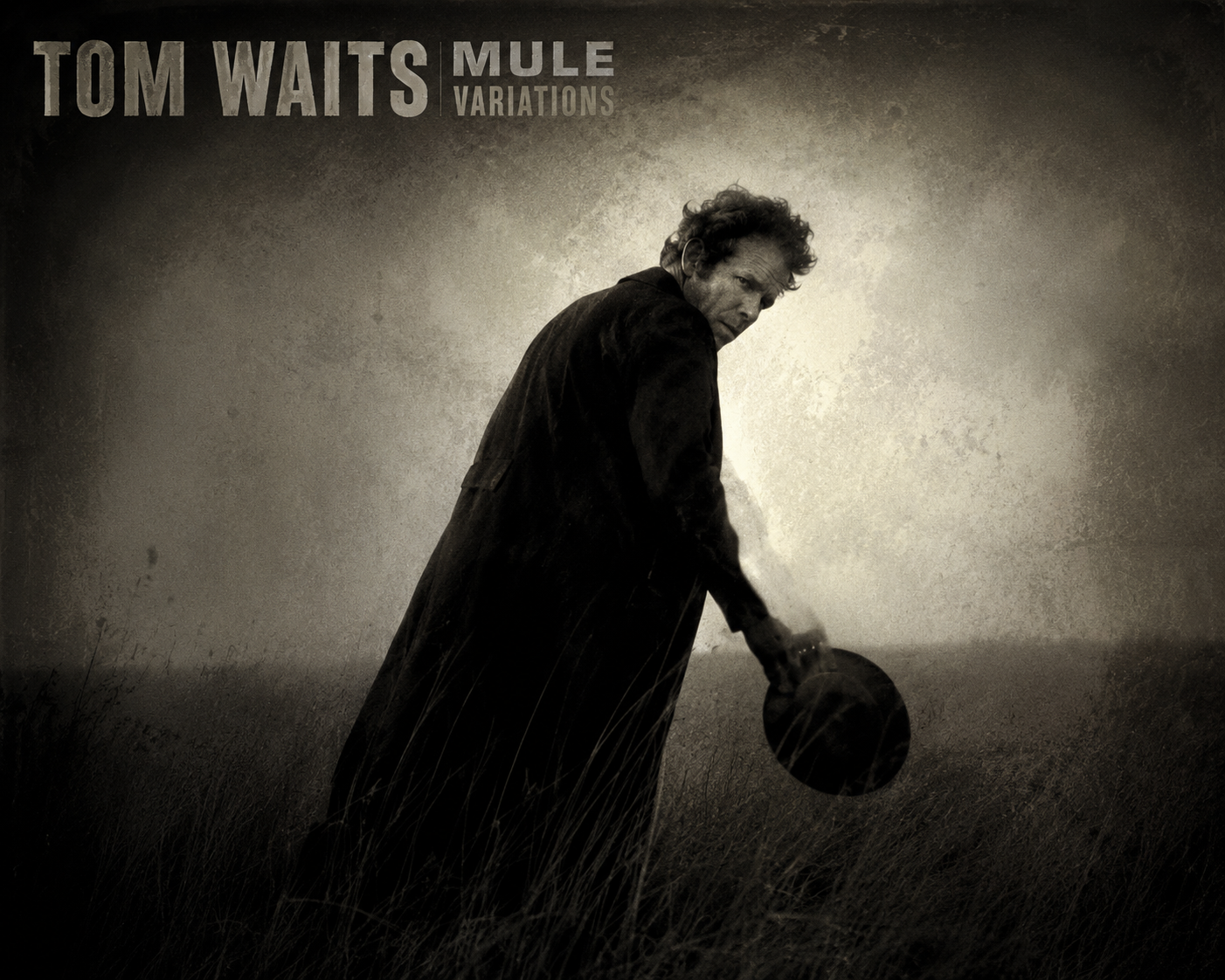
Mule Variations — Tom Waits (1999)
Overview
After six years of studio albums -- his last being 1993's The Black Rider -- Tom Waits returned in 1999 with Mule Variations (released on April 16, 1999 on ANTI- label, his first move to what was still a new label, Epitaph Records. It was worth the wait: he won a Grammy Award for Best Contemporary Folk Album and a nomination for Best Male Rock Performance for "Hold On" and sold more than 500,000 copies worldwide. In 2003 it was ranked 416 on Rolling Stone’s list of the 500 Greatest Albums of all time and is still one of the most talked about records of Waits after Swordfishtrombones -- the point where his “junkyard” experimentalism and his gift for tender balladry merged to create a perfect balance.
Sound and Production
The album was largely recorded at Prairie Sun Recording Studios in Cotati, California with Waits producing and working with his wife and long-time collaborator Kathleen Brennan, who — as he has since Swordfishtrombones— wrote almost every song together with him. Waits has described the sound of the record as "surrural" (surrealism and rural Americana, but also very much rural, and it’s also infused with old and old-time familiar). That tension is what sets the album apart. Clattering, homemade percussion, distorted vocals and off-kilter blues stomps match up in the background with some of the plainest, most devastatingly sincere ballads he’s ever written.
Track-by-Track Highlights
The record opens with "Big in Japan," a grinding industrial blues stomp that makes it clear immediately that this is not a “comeback” in the conventional sense— it’s Waits repeating the clanking, percussive junk-band sound he’d been honing since the mid-80s. "Lowside of the Road" and "Get Behind the Mule" (the latter being a reference to a line Waits said his father-in-law once said to him) carry that grimy momentum through scraping guitar and a swampy, half-spoken vocal delivery. Marc Ribot’s guitar work on the whole record— angular, splintering and never quite where you expect it— is part of what gives these tracks menace.
And there’s the other Waits. "Hold On" is the most beautiful song he’s ever made: a road song about holding onto someone (or something) that is plainspoken without ever feeling sentimental. "House Where Nobody Lives" and "Picture in a Frame" are aching, plainly sung meditations on love and loss which are a reminder of the balladry of the Closing Time-era Waits and decades of aging wear on his voice. "Take It With Me" is the final section of the album to close it with a piano ballad that’s so unguarded that it feels like it belongs to another record— and that’s what’s the point.
In between, Waits indulges his stranger impulses. "What's He Building?" is a spoken-word piece— paranoid neighborhood gossip about a mysterious recluse-- and it’s laid on a bed of found sound and tape hiss; it’s less a song than a short story, one of the most polarizing and widely quoted tracks on the record. "Filipino Box Spring Hog" and "Eyeball Kid" go carnival barker on both sides— distorted vocals and lurching rhythm— while "Chocolate Jesus" is a loose harmonica-led blues shuffle that’s as funny as it is sly. "Georgia Lee" stands out as the album’s emotional gut-punch, a somber piano ballad about a murdered child and delivered with a very subdued restraint. The album ends with "Come On Up to the House," a gospel-tinged invitation which has since become one of Waits’ most frequently covered songs, its warmth lending a soothing grace note after seventy minutes of dirt-road blues and heartbreak.
Themes
Musselwhite’s harmonica, Larry Taylor’s bass and Smokey Hormel’s guitar all fit into the blues bones of the record and Waits’ son Casey Waits plays percussion— reinforcing the sense of Mule Variations as a family and community affair that’s recorded in barns and converted rooms and is not a polished studio. The music is mostly about rural decay, itinerant characters, faith (sincere and mocking) and domestic tenderness— all in the same song. It’s an album that’s obsessed with dwellings: houses where nobody lives, houses you’re invited up to, houses being mysteriously built next door.
Critical Reception and Legacy
Reviews at the time were nearly uniformly good— Pitchfork gave it a rare 9.5 rating, and The Village Voice an A-minus— and the record is often cited as the beginning of Waits’ incredibly fertile ANTI-years, which would eventually include Alice, Blood Money, and Real Gone. Mule Variations also was the first album released on ANTI- Records, and its success brought artists like Solomon Burke, Marianne Faithfull, and Mavis Staples to the label in the years to come.
Verdict
Mule Variations is so successful because it doesn’t pick a lane between Waits’ two great modes— the avant-garde noise collagist and the barroom romantic— and it lets them argue with each other for seventy minutes. It’s sprawling, a little baggy in places, but its high points (the one-two gut-punch of "Hold On" into "Get Behind the Mule" and the ending "Come On Up to the House") are some of the best he ever wrote. For newbies to Waits, it is probably the best point in his career to start with– a career-spanning summary disguised as a single album.